About this demo
Every player hears a different store.
Music Universe is a demo retailer for guitars, pedals, live sound and studio gear. It sells to players and to the venues, schools and studios they play in. The ranked front page, the cable check and the venue quote all come from one Crystallize tenant, read through two APIs.
- products from 28 brands
- 316
- variants, every finish its own SKU
- 656
- taste vocabularies
- 5
- currencies across 7 markets
- 4
- rental depots
- 3
Every channel gave a slightly different answer.
A typical music retailer keeps specs in a PIM, photos in a DAM, prices in the ERP, search with one vendor, recommendations with another and trade customers in a separate portal. The filter says the bass has a 34-inch scale, the assistant says 32, and nobody knows which feed is wrong.
Each new idea, from personal ranking to a compatibility check, starts life as an integration project.
Personalisation
Four faders. One taste vector. A reason for every position.
The faders on the front page hold the shopper’s taste in the store’s own words: tone, era, room and level. They start from the shopper’s order history. Products carry the same keys, so Crystallize Discovery ranks the whole catalogue by similarity inside the search query and returns the reason for each position. Nothing is trained, and there is no recommendation service on the side.
MiaSongwriter, Bergen
- 1
- 2
- 3
- 4
ErikBlues and rock, Oslo
- 1
- 2
- 3
- 4
Same catalogue, same query. Only the taste vector differs. Ranked live, right now.
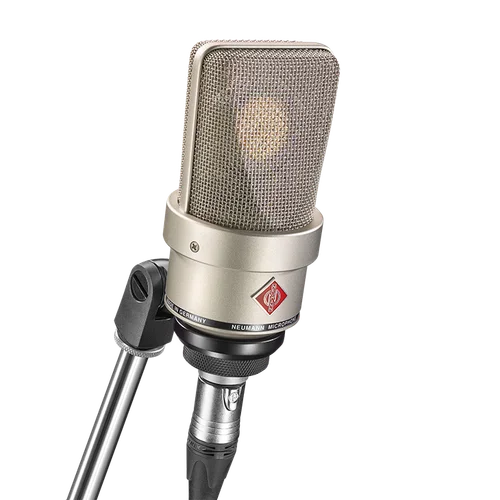
- Neumann TLM 103
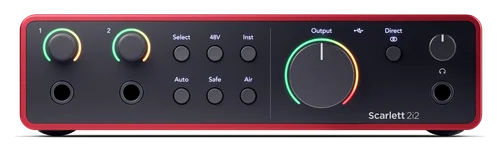
- Focusrite Scarlett 2i2
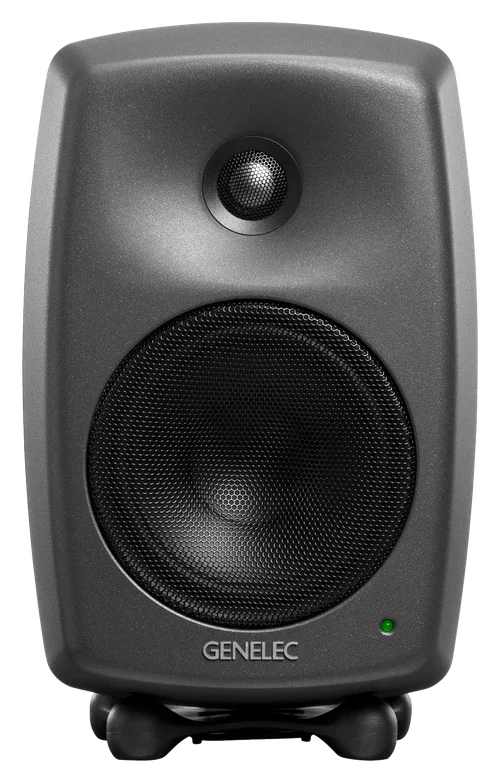
- Genelec 8030C
Works48 V phantom from the Scarlett for the TLM 103.
MissingTRS out, XLR in. Two TRS-to-XLR cables.
Typed specs
Every cable, checked against the manufacturer’s spec.
Specs are typed values with units: 69 dB of gain, 48 V phantom, a TRS output, an XLR input, 300 mA at 9 V. The signal chain builder reads those fields and tells the shopper what is missing before they pay: TRS-to-XLR cables for a pair of Genelecs, a power amp for passive speakers, a 24 V supply for a Deluxe Memory Man.
The same rules check a pedalboard’s power and an Orange head against its cabinet.
Build a home studio chainBlind soundcheck
Ears first.
A shopper hears the same riff through two amps or pedals, matched for loudness, with names and prices hidden. After five rounds we reveal what they picked, and the store re-ranks around it. The picks feed a fifth vocabulary, ears, that runs from warm to bright and from compressed to open.
Amp and pedal captures come from creators on TONE3000 and are credited at every reveal. Powered by TONE3000.
Take the blind soundcheckB2B
Draw the stage. Get the quote.
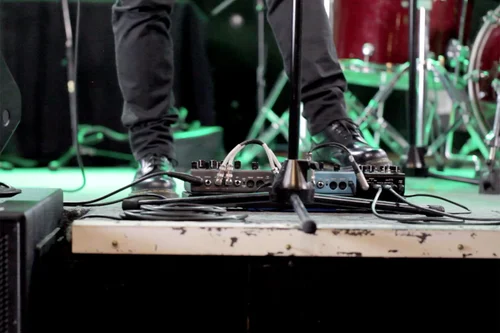
A band drags its players, amps and wedges onto a stage plot. The input list, monitor mixes and cable lengths follow from the drawing. Music Universe checks the plot against what the band owns and what the venue has, then prices the rest at the venue’s own price list: buy two mics, rent an AR84 stagebox for Friday. The venue receives a native Crystallize quote it can approve.
“We used to rebuild every rider in a spreadsheet. Now the band draws the stage and we get a quote with our prices on it.”
Spec sheet, Fender American Professional II Stratocaster
Follow one number through the store.
The Strat has a 648 mm scale. It is written once, as a number with a unit, and shows up everywhere below.
648mm
- Category filterA facet on Electric guitars, 648 mm or 628 mm
- Spec sheetA row with the inch value beside it
- Assistant and Claude“A Strat with a 25.5-inch scale under 25 000 kr”
- Structured dataProduct JSON-LD and an Open Graph share card
- Markdown twinA line in the page’s .md version and in llms.txt
- Norwegian, SwedishThe same 648 mm. Numbers are never translated
Measured in production.
Pages are rendered on the server and cached, and the faders are the only real client script. These are this deploy’s numbers.
Search engines are told not to index the store. Titles, structured data, share cards and llms.txt are all in place; the product data belongs to the manufacturers.
- 98Front pageLCP 2.3 s
- 100Category pageLCP 1.1 s
- 94Product pageLCP 3.0 s
- 1.1–3.0 s
- Largest contentful paint
- 31–88 ms
- Time to first byte
- 165 KB
- JavaScript, product page
Lighthouse mobile, 18 Nov 2026: home, category and product page
Built by AI agents, directed by people.
Agents researched the manufacturers’ own sites, normalised 316 products into a typed model, designed the shapes and topic maps, and wrote the seed, all through the Crystallize MCP and its skills. The tenant is code: one command rebuilds tenant settings, model, taxonomy, images, catalogue, rentals, customers, orders and vectors.
$npm run seed
- Shapes and pieces
- 13, 41
- Topics, in en, no and sv
- 422
- Images with alt text and topics
- 3,368
- B2B price lists
- 4
- Taste vocabularies
- mix, sound, rig, use, ears
Six steps from your stack to this one.
- 1
Model your catalogue as shapes, typed spec pieces and topic maps.
- 2
Import from your PIM or ERP with a repeatable seed. Images arrive with alt text and topics.
- 3
Put one category or one market live on the new storefront, beside the old site.
- 4
Move search, facets and ranking for that slice to Discovery, and switch off the old vendors there.
- 5
Add B2B price lists, quotes and approvals, rentals, the assistant and the MCP server on the same data.
- 6
Retire the old PIM and commerce engine slice by slice. Your ERP keeps stock, price and orders flowing.
What it costs to run a store like this.
Crystallize prices are public. Music Universe, with about 316 products, B2B price lists and rentals, fits Atom.
Particle
Free
plus metering
- 100 items, 25 orders
- 25 000 API calls a month
- 5 GB bandwidth
Atom
$949
a month, plus metering
- 5 000 items, 500 orders
- 500 000 API calls a month
- 50 GB bandwidth, Pro SLA
Crystal
Tailored
plus metering
- Production, staging and development tenants
- SSO and a dedicated engineering channel
- Data modelling and architecture sessions
From crystallize.com/pricing, November 2026. Unlimited users and languages on every plan.See all pricing
Running on Crystallize today.










Sandqvist
Sandqvist rebuilt its store on Crystallize in four months, went from 6 to 44 markets and cut ongoing tech costs by 9 %. Work that took days now takes hours.
Read the Sandqvist case“Like our team size doubled.”
Ten minutes through the store.
- 1Switch from Erik to Mia in the header and watch the chart reshuffle.
- 2Open Electric guitars and filter on 628 mm scale and HH pickups.
- 3Build a home studio chain with Genelecs and add the cables it is missing.
- 4Take the blind soundcheck.
- 5Open The Lowlands’ stage plot and add the missing gear for Friday.
- 6Log in as Kulturhuset Sentrum and see venue prices.
- 7Add the MCP server (music-universe.superfast.shop/mcp) to Claude and ask for a PA for a 300-cap room on Friday. Or press Ask in the header.
- 8Add .md to any URL to see what a language model reads.

Build yours on the same API.
Everything in this store runs on public Crystallize APIs and plans. Start free and model your own catalogue, or talk to us about moving a store like yours.